I've loved teaching American Literature this year. It's the first time I've had the class since I was a student teacher, so the material feels completely fresh to me. (It's also dredged up memories of my own high school experience, and the inimitable Dr. Dunn, who ultimately inspired me to take up a career in English teaching.)
My favorite facet of the course is its link to various philosophies. As we march through the history of American letters, we encounter the surge and retreat of various perspectives on life, love, nature, God, and the Universe. It's a long way from the Pequots or the Puritans to the Postmoderns, but, in the grand scheme, it's not so far a journey after all.
If I had to pick a favorite among favorites, I'd go with the Naturalists, with their scientific pessimism and earthy realism. As a junior, I was struck by Stephen Crane's cynicism, and wrote a (terrible) short story in the style of "The Open Boat." The experience changed me. (Probably for the worse.)
And so, as an English teacher, of course I've foisted that activity on my students. To help them--and you--to write a story in the Naturalist style, I have invented a template. Feel free to copy with attribution, and if you make any money on your masterpiece, I get 25%.
The Naturalist Story Template
an [average / poor / desperate / stupid / ugly / cruel ] person
struggles against [disease / poverty / racism / nature / temptation]
in [a desert / a jungle / the Arctic / a forest / the streets / factory / prison]
ultimately [losing / failing / dying / going mad / wasting away]
at the hands of [human cruelty / human indifference / an indifferent universe / inability to understand herself / bad luck]
That's it. Fill in the template, write away, and publish a bestseller.
Oh, and whatever you do, give it a third-person narrator, an ironically tragic (or tragically ironic) ending, and some faintly purple prose. You can't go wrong with purple prose.
Showing posts with label books and literature. Show all posts
Showing posts with label books and literature. Show all posts
Mar 17, 2014


Apr 16, 2011
Emily Lockhart comes to CHS
Northwest author Emily Lockhart came to Capital Friday afternoon, sharing her experiences with six English classes. In a presentation that was relatable, self-deprecating, and honest, Lockhart spoke about her life as a student and as a writer--and explained how the two were intertwined. She grew up in Seattle, and first attended a "granola" and "bohemian" prep school; as she put it, "We all had to promise to never buy a car."
A loner, the sort of person others avoid in the cafeteria, Lockhart decided to transfer to Lakeside School, where she was able to reinvent herself in a surprising fashion:
Like a lot of fiction writers, Lockhart took time to get noticed. Her first attempt at publish non-fiction was rejected 70 times; her first success, a children's book, was rejected 30 times--and then, when published, "it was a lovely experience, but nobody read it." She wrote five unnoticed novels before The Boyfriend List finally caught readers' attention. Now, she's published a book a year for the last eight years. In her words, "It's not an easy way to get rich, but you can make a living."
You could sense Lockhart's palpable enthusiasm for her craft when she talked about the way she develops narrative.
And one last thing: Lockhart pointed out, "I'm on Twitter, you can come follow me." (She's @elockhart.)
A loner, the sort of person others avoid in the cafeteria, Lockhart decided to transfer to Lakeside School, where she was able to reinvent herself in a surprising fashion:
I didn't change anything about myself--how I looked, how I acted. I just showed up to see what happened. What happened was, I made friends.... I had a totally different life. I saw high school life from somewhere near the top, and somewhere near the bottom.... that's why I keep writing about it.As Lockhart explained, unlike many places in the adult world, high school throws together people of every conceivable disposition and circumstance, with no real option for escape. The conflict that results is what interests her, and her young adult books are full of italicized, capital-D Drama.
Like a lot of fiction writers, Lockhart took time to get noticed. Her first attempt at publish non-fiction was rejected 70 times; her first success, a children's book, was rejected 30 times--and then, when published, "it was a lovely experience, but nobody read it." She wrote five unnoticed novels before The Boyfriend List finally caught readers' attention. Now, she's published a book a year for the last eight years. In her words, "It's not an easy way to get rich, but you can make a living."
You could sense Lockhart's palpable enthusiasm for her craft when she talked about the way she develops narrative.
You become a little bit fond of the character. I gave Ruby traits that I like--some of them are mine. I liked Ruby. Once you create a character that you like, as a fiction writer, what you have to do is torture them. If you have a story about a happy person with a good life, and they continue to be a happy person with a good life, you don't have a story, you have a description. Your job as a writer is to ask, "What's the worst thing that could happen?"Some of Lockhart's best advice concerns her writerly motivation.
I don't feel like writing a lot of the time. I make myself do it. I write junk... I set a goal. I'm going to write 500 words, and then I can have a chocolate chip cookie.... Some day it's really fun and the best job ever. My writing teacher [in her university program] thought I sucked. But I'm the only one from the class who became a published writer. Why? Because my books are finished.Lockhart's down-to-earth persona and frank advice seemed to resonate with the students in her audience. Even though YA Teen Drama isn't really my thing, I'm going to check out a couple of her books, and recommend her work to my students.
And one last thing: Lockhart pointed out, "I'm on Twitter, you can come follow me." (She's @elockhart.)
Mar 12, 2011
the suspect sat near the front
As a teacher, I've seen students of nearly every stripe, but I can say with some confidence that I've never had a suspected ax murderer in the mix.
Ellen Laird's account compels without sensationalizing. Read it.
[via ALDaily]
Ellen Laird's account compels without sensationalizing. Read it.
[via ALDaily]
Dec 20, 2010
liberal pinko commie

Dec 16, 2010
brother wrote a book

Congrats to my brother, who will soon have his first book published. (First solo project, anyhow, which counts more than sharing a volume with a bunch of other essayists, right, Bro?)
It's been a labor of much love for him--hopefully more love than labor--and will quite possibly cement his reputation as one of the premier young evangelical thinkers in the U.S. Expect to find it on bookshelves this June, or you can go ahead and preorder it at Amazon. (What better way to spend your Christmas giftcard?)
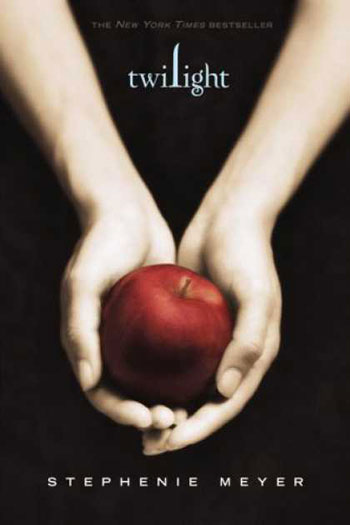
If we judge the book by its handsome cover, the potential audience for Earthen Vessels is composed of evangelical Christians, theologians, philosophers, various other assorted intellectual types, and, quite possibly, highly confused semi-literate adolescents.
Nov 14, 2010
a few good books
Let me take a little breather from debate-blogging to suggest some good reads.
See What I'm Saying, Lawrence D. Rosenblum
If you trained yourself, you could echolocate like a bat. Not as well as a bat, of course, but pretty darn well, considering. Rosenblum's first chapter explains how, while the rest of the book illuminates other surprising features of the senses. The upshot: it's actually misleading to think of a discrete batch of five senses; we all, to varying degrees, have what Rosenblum calls "multisensory perception." At least, that's how I smell it.
The Black Swan, Nassim Taleb; Being Wrong: Adventures in the Margin of Error, Kathryn Schulz
Of course, if our powers of perception are much better than we imagine, our cognition is much worse. These books aren't intended to be therapeutic, but, at least from this wrongster's perspective, they are, in the best possible way.
The Man Who Lied to His Laptop, Clifford Nass and Corina Yen
What can we learn about human nature by studying our interactions with machines? Hopefully, a great deal. This book provoked me to reconfigure the way I give feedback--and how I teach students to give each other feedback.
Here's Looking at Euclid, Alex Bellos
Love the title, and, even more, the explanations of mathematical concepts, which are entertaining and accessible in equal measures. Because the best math teachers always have the corniest jokes, right?
See What I'm Saying, Lawrence D. Rosenblum
If you trained yourself, you could echolocate like a bat. Not as well as a bat, of course, but pretty darn well, considering. Rosenblum's first chapter explains how, while the rest of the book illuminates other surprising features of the senses. The upshot: it's actually misleading to think of a discrete batch of five senses; we all, to varying degrees, have what Rosenblum calls "multisensory perception." At least, that's how I smell it.
The Black Swan, Nassim Taleb; Being Wrong: Adventures in the Margin of Error, Kathryn Schulz
Of course, if our powers of perception are much better than we imagine, our cognition is much worse. These books aren't intended to be therapeutic, but, at least from this wrongster's perspective, they are, in the best possible way.
The Man Who Lied to His Laptop, Clifford Nass and Corina Yen
What can we learn about human nature by studying our interactions with machines? Hopefully, a great deal. This book provoked me to reconfigure the way I give feedback--and how I teach students to give each other feedback.
Here's Looking at Euclid, Alex Bellos
Love the title, and, even more, the explanations of mathematical concepts, which are entertaining and accessible in equal measures. Because the best math teachers always have the corniest jokes, right?
Oct 11, 2010
how to road-test a thesaurus
How do you tell one thesaurus from another? They're all so doggone / darn / gosh-darn / danged similar.
Here's one way, which I invented this morning while teaching.
During a conversation about reading strategies, one of my students suggested the thesaurus as a place to look up unfamiliar words. "That's a good emergency option if you don't have a dictionary," I said. "But thesauruses just can't list as many entry words as a dictionary can. For instance, my guess is that you'll find 'pulchitrudinous' as a synonym for 'beautiful,' but not the other way around."
She seemed a little dubious, so I said to grab a random thesaurus off my pile of random thesauruses, and test my theory.
Of course, the first one she opened had "pulchitrudinous" as its own entry.
I laughed and admitted that I hadn't chosen the best example, but that my reasoning was generally still sound. After class ended, I checked the rest of the thesauruses--big ones, small ones, medium-sized ones, college editions or average Joe versions, even Roget's II. Turns out about half of them had "pulchitrudinous" or "pulchitrude" as its own entry. (I was doubly disappointed that The Superior Person's Book of Words didn't include the term. Perhaps it's not as uncommon as I had hoped.)
So that's when I turned lemonade into an Arnold Palmer, and devised this handy way of picking a good thesaurus. Open it up to P, and if it has "pulchitrudinous" or "pulchitrude" as an entry (usually "Pulchitrudinous: See beautiful"), you're probably / likely / possibly / potentially holding a good one.
Sidebar
Of course, Firefox's automatic spell-checker, which dutifully underlines every perceived orthographical slight, doesn't recognize "pulchitrudinous" or "pulchitrude" as legitimate.
Here's one way, which I invented this morning while teaching.
During a conversation about reading strategies, one of my students suggested the thesaurus as a place to look up unfamiliar words. "That's a good emergency option if you don't have a dictionary," I said. "But thesauruses just can't list as many entry words as a dictionary can. For instance, my guess is that you'll find 'pulchitrudinous' as a synonym for 'beautiful,' but not the other way around."
She seemed a little dubious, so I said to grab a random thesaurus off my pile of random thesauruses, and test my theory.
Of course, the first one she opened had "pulchitrudinous" as its own entry.
I laughed and admitted that I hadn't chosen the best example, but that my reasoning was generally still sound. After class ended, I checked the rest of the thesauruses--big ones, small ones, medium-sized ones, college editions or average Joe versions, even Roget's II. Turns out about half of them had "pulchitrudinous" or "pulchitrude" as its own entry. (I was doubly disappointed that The Superior Person's Book of Words didn't include the term. Perhaps it's not as uncommon as I had hoped.)
So that's when I turned lemonade into an Arnold Palmer, and devised this handy way of picking a good thesaurus. Open it up to P, and if it has "pulchitrudinous" or "pulchitrude" as an entry (usually "Pulchitrudinous: See beautiful"), you're probably / likely / possibly / potentially holding a good one.
Sidebar
Of course, Firefox's automatic spell-checker, which dutifully underlines every perceived orthographical slight, doesn't recognize "pulchitrudinous" or "pulchitrude" as legitimate.
Sep 29, 2010
middle-brow, unibrow
Your beloved art isn't really art. It's "art." Sorry.
[via Arts and Letters Daily]
Urban Intellectual Fodder.Good old fashioned aesthetic snobbery. It stings, but it sings.
Neither original nor path-breaking, this art is derivative hommage; postmodern commentary around the edges of art.
It is art born of attitude, not passion. It is art that postures but doesn't grip. It is art created by those who are more passionate about a career in art than about art itself.
It encompasses:
1. The indie rock spawned in urban art ghettoes.
2. The visual art spelonked in Williamsburg.
3. The movies sputtered by independents hoping to get into Sundance.
4. The novels spritzed by creative writing majors from Iowa University and other environs....
All it does is put a sheen of high-brow smarts on art that is actually middle-brow. And comes out bloodless.
[via Arts and Letters Daily]
Jul 19, 2010
ten titles in search of an author
(Apologies to Pirandello, and thanks to my brother.)
The Compleat Blogger
Idiot Boxers: The Ever-Dumbening Discourse of Cable News
Don't Bet on Sports
A Theological History of the Coen Brothers
Ethics You Can Actually Live By
Finding Bromance
A Guide to Cheating at Solitaire
Twitter Told Me So
There Ought to be Crying in Baseball
The Social Contract in the Age of the End User License Agreement
The Compleat Blogger
Idiot Boxers: The Ever-Dumbening Discourse of Cable News
Don't Bet on Sports
A Theological History of the Coen Brothers
Ethics You Can Actually Live By
Finding Bromance
A Guide to Cheating at Solitaire
Twitter Told Me So
There Ought to be Crying in Baseball
The Social Contract in the Age of the End User License Agreement
Jul 10, 2010
The Obama Victory: How Media, Money, and Message Shaped the 2008 Election
For those of us who survived the most expensive (and expansive) election in American history, and yet are still curious about its inner workings, comes The Obama Victory: How Media, Money, and Message Shaped the 2008 Election, by Kate Kenski, Bruce Hardy, and Kathleen Hall Jamieson. Pitched right between "interested layperson" and "studious academic," the book attempts to outline all the factors that led to the Illinois senator's triumph.
The book is well organized, first establishing the political and economic context, then tackling the campaign's overall themes, then showing the evolving discourse through five stages in the campaign (starting in June of '08), and analyzing the effects of early/absentee voting, microtargeting, and new media influences. There are charts and graphs aplenty, with attendant footnotes. The style is straightforward, peppered in places with folksy images that complement more analytical passages, and even including, at one point, an apology for employing terms of art like "explained variance." The book is at its most technical in the 12th chapter, which covers microtargeting (and features the work of co-author Chris Adasiewicz) and in the Appendix, which quantifies the nonstop nature of the campaign by calculating "delay effects" in media absorption.
Otherwise, when the amount of relevant information threatens to bog down the argument, the text is marked with an asterisk, which signals that the reader can visit the Annenberg Foundation's related blog for more information. (At this moment, it's unavailable; I presume more will be forthcoming when the book is officially released on July 15th.)
The book is evenhanded in its analysis, not shying away from discussing the missteps, deceptions, and evasions on both sides. It also puts to rest the myth that Obama's fundraising represented an unparalleled outpouring of support by individual donors.
While the authors present a compelling explanation for the outcome--within the understanding that, ultimately, the message-makers directly influence only a portion--more interesting to me are the little revelations along the way. How Obama's team used radio, of all things, to shift moderate women's belief about McCain's stance on abortion by 20 percentage points in four and a half months. How Sarah Palin, if the graphs don't lie, singlehandedly made it possible for a solid and stable majority of Republicans to believe that a woman was ready to be president. How the biggest "bounces" for candidates came after the most highly orchestrated moments: Obama's "A More Perfect Union" speech on race, Palin's speech at the Republican National Convention. How "liberal" as an epithet has run its course, at least as a predictor of election outcomes.
Obama's defeat of Hillary Clinton (and the mythic Clinton machine) was more surprising, in my view, than his defeat of McCain--whose own campaign nearly flamed out in the primaries. Though mentioned obliquely or inferred at various points, the primaries' magnitude and key events are given short shrift; they deserve their own chapter in any subsequent edition. I'd also like to see a more thorough treatment of race in the election beyond the analysis of coded messages in campaign ads-- although that likely would've required an entirely different dataset, so I won't count that as a criticism.
It's to the authors' credit that the book spurs all sorts of questions:
Sidebar: Readers further interested in the people behind the campaign should check out Kathleen Hall Jamieson's earlier companion piece, Electing the President, 2008: The Insiders' View.
Full disclosure: Oxford University Press sent me a free copy of the book for review. If you're interested in doing the same, just send me an email.
The book is well organized, first establishing the political and economic context, then tackling the campaign's overall themes, then showing the evolving discourse through five stages in the campaign (starting in June of '08), and analyzing the effects of early/absentee voting, microtargeting, and new media influences. There are charts and graphs aplenty, with attendant footnotes. The style is straightforward, peppered in places with folksy images that complement more analytical passages, and even including, at one point, an apology for employing terms of art like "explained variance." The book is at its most technical in the 12th chapter, which covers microtargeting (and features the work of co-author Chris Adasiewicz) and in the Appendix, which quantifies the nonstop nature of the campaign by calculating "delay effects" in media absorption.
Otherwise, when the amount of relevant information threatens to bog down the argument, the text is marked with an asterisk, which signals that the reader can visit the Annenberg Foundation's related blog for more information. (At this moment, it's unavailable; I presume more will be forthcoming when the book is officially released on July 15th.)
The book is evenhanded in its analysis, not shying away from discussing the missteps, deceptions, and evasions on both sides. It also puts to rest the myth that Obama's fundraising represented an unparalleled outpouring of support by individual donors.
While the authors present a compelling explanation for the outcome--within the understanding that, ultimately, the message-makers directly influence only a portion--more interesting to me are the little revelations along the way. How Obama's team used radio, of all things, to shift moderate women's belief about McCain's stance on abortion by 20 percentage points in four and a half months. How Sarah Palin, if the graphs don't lie, singlehandedly made it possible for a solid and stable majority of Republicans to believe that a woman was ready to be president. How the biggest "bounces" for candidates came after the most highly orchestrated moments: Obama's "A More Perfect Union" speech on race, Palin's speech at the Republican National Convention. How "liberal" as an epithet has run its course, at least as a predictor of election outcomes.
Obama's defeat of Hillary Clinton (and the mythic Clinton machine) was more surprising, in my view, than his defeat of McCain--whose own campaign nearly flamed out in the primaries. Though mentioned obliquely or inferred at various points, the primaries' magnitude and key events are given short shrift; they deserve their own chapter in any subsequent edition. I'd also like to see a more thorough treatment of race in the election beyond the analysis of coded messages in campaign ads-- although that likely would've required an entirely different dataset, so I won't count that as a criticism.
It's to the authors' credit that the book spurs all sorts of questions:
- Is there a better way to quantify the effects of factors like race and age?
- How did rhetorical or speaking styles influence voters' perceptions of the candidates?
- At what point does the nonstop campaign produce diminishing returns and trigger voter nausea or a sense of minimal personal impact? In other words, might the increasingly brutal election cycle somehow reduce democratic participation?
- Is the media's sophistication in coverage growing beyond mere 3-D "situation room" wizardry?
- How might the "Comedy Central bloc" swing future elections?
- How can we more accurately assess the impact of social networks?
Sidebar: Readers further interested in the people behind the campaign should check out Kathleen Hall Jamieson's earlier companion piece, Electing the President, 2008: The Insiders' View.
Full disclosure: Oxford University Press sent me a free copy of the book for review. If you're interested in doing the same, just send me an email.
May 23, 2010
Martin Gardner, RIP
Martin Gardner has passed away at the age of 95. I can still remember the first time I read Fads and Fallacies in the Name of Science, one of the books that kick-started my critical thinking skills and made me wish I had double majored in English and biology rather than English and history.
Out of all the book's trenchant dissections of all sorts of pseudoscience, my favorite is the bit on hollow earth theories, including Cyrus Reed Teed's unbelievable notion that we live inside a sphere.
Out of all the book's trenchant dissections of all sorts of pseudoscience, my favorite is the bit on hollow earth theories, including Cyrus Reed Teed's unbelievable notion that we live inside a sphere.
The entire cosmos, Teed argued, is like an egg. We live on the inner surface of the shell, and inside the hollow are the sun, moon, stars, planets, and comets. What is outside? Absolutely nothing! The inside is all there is. You can't see across it because the atmosphere is too dense....One of the Gardner's key insights, in his analysis of crankish patterns of behavior, was to point out the crank's fondness for language games.
Like most psuedo-scientists, who wish to impress the reader with their vast scientific knowledge, Teed has a tendency to let his words carry him into obscurities sometimes hard to follow. Planets, for example, are "spheres of substance aggregated through the impact of afferent and efferent fluxions of essence...." And comets are nothing less than "composed of cruosic 'force,' caused by condensation of substance through the dissipation of the coloric substance at the opening of the electro-magnetic circuits, which closes the conduits of solar and lunar 'energy.'"It seems hard to believe that at one point Teed--who began calling himself "Koresh"--had roughly 4,000 followers. But then, one skim through Fads and Fallacies proves that it's not so hard to believe after all. It takes the Martin Gardners of the world to puncture our propensity to be drawn to the cruosic force of the absurd.
Dec 17, 2009
an offer you should probably refuse
In a current commercial, James Patterson, crime novelist ordinaire, urges readers to purchase his latest novel (at least I think it's his), I, Alex Cross. If they refuse? He'll kill off the character.
It's a ploy that's equal parts clever and desperate. I'm sure Patterson has no real plans to ax one of his major breadwinners, but at least it gets attention. And it just might work.
Now, let's find a frail, pulp-loving soul who has already fallen for the scheme, and get 'em to press charges for literary extortion.
It's a ploy that's equal parts clever and desperate. I'm sure Patterson has no real plans to ax one of his major breadwinners, but at least it gets attention. And it just might work.
Now, let's find a frail, pulp-loving soul who has already fallen for the scheme, and get 'em to press charges for literary extortion.
Nov 23, 2009
36 arguments, 37 disappointments
If each of the 36 arguments for God's existence is underwhelming, well, that's disappointment enough. But there's an additional letdown: the book subjecting all 36 to scrutiny is a mildly comic novel--and a very badly written one at that.
It's not like Cass Seltzer to be out in the middle of an icy night, lost in thought while losing sensation in his extremities. Excitement had gotten the better of him. He had lain in his empty bed for hours, mind racing, until he gave up and crawled out from under the luxe comforter that his girlfriend Lucinda Mandelbaum had brought with her when she moved in with him at the end of June. This comforter has pockets for the hands and feet and a softness that's the result of impregnation with aloe vera. As a man, Cass had been skeptical, but he's become a begrudging believer in Lucinda's comforter, and in her Tempur-Pedic pillow, too, suffused with the fragrance of her coconut shampoo, making it all the more remarkable that he'd forsake his bed for this no-man's stretch of frigid night...."Cass Seltzer" and "Lucinda Mandelbaum" and "impregnation with aloe vera" are trying too hard. "Bleak week" isn't trying hard enough. And the present tense is simply wrong.
Lucinda's away tonight, away for the entire bleak week to come. Cass is missing Lucinda in his bones, missing her in the marrow that's presently crystallizing into ice. She's in warmer climes, at a conference in Santa Barbara on "Non-Nash Equilibria in Zero-Sum Games." Among these equilibria is one that's called the "Mandelbaum Equilibrium," and it's Cass's ambition to have the Mandelbaum Equilibrium mastered by the time he picks her up from the airport Friday night.
Sep 6, 2009
Nathaniel Hawthorne, quasi-libertarian?
Re-reading The Scarlet Letter means re-reading "The Custom-House," its windy (in both pronunciations) preface. (If you skipped it, I don't blame you. But you really should go back and read it--it's a witty counterpoint to the heavy-handed moralizing of the novel.)
Hawthorne's experience as a federal employee turned him into a bit of a libertarian. In a typical digression, he writes,
Hawthorne's experience as a federal employee turned him into a bit of a libertarian. In a typical digression, he writes,
An effect—which I believe to be observable, more or less, in every individual who has occupied the position—is, that, while he leans on the mighty arm of the Republic, his own proper strength departs from him. He loses, in an extent proportioned to the weakness or force of his original nature, the capability of self-support. If he possess an unusual share of native energy, or the enervating magic of place do not operate too long upon him, his forfeited powers may be redeemable. The ejected officer—fortunate in the unkindly shove that sends him forth betimes, to struggle amid a struggling world—may return to himself, and become all that he has ever been. But this seldom happens. He usually keeps his ground just long enough for his own ruin, and is then thrust out, with sinews all unstrung, to totter along the difficult footpath of life as he best may. Conscious of his own infirmity,—that his tempered steel and elasticity are lost,—he for ever afterwards looks wistfully about him in quest of support external to himself. His pervading and continual hope—a hallucination, which, in the face of all discouragement, and making light of impossibilities, haunts him while he lives, and, I fancy, like the convulsive throes of the cholera, torments him for a brief space after death—is, that, finally, and in no long time, by some happy coincidence of circumstances, he shall be restored to office. This faith, more than any thing else, steals the pith and availability out of whatever enterprise he may dream of undertaking. Why should he toil and moil, and be at so much trouble to pick himself up out of the mud, when, in a little while hence, the strong arm of his Uncle will raise and support him? Why should he work for his living here, or go to dig gold in California, when he is so soon to be made happy, at monthly intervals, with a little pile of glittering coin out of his Uncle’s pocket? It is sadly curious to observe how slight a taste of office suffices to infect a poor fellow with this singular disease. Uncle Sam’s gold—meaning no disrespect to the worthy old gentleman—has, in this respect, a quality of enchantment like that of the Devil’s wages. Whoever touches it should look well to himself, or he may find the bargain to go hard against him, involving, if not his soul, yet many of its better attributes; its sturdy force, its courage and constancy, its truth, its self-reliance, and all that gives the emphasis to manly character.Later on, Hawthorne credits his (politically-motivated) dismissal for providing him with the creative energy and spark to turn the outline for The Scarlet Letter into a living, breathing, perpetually sermonizing novel.
Mar 31, 2009
students are brilliant
Yesterday, in the middle of a discussion of "you," specifically as it pertains to narrative fiction (and more specifically in The Death of Artemio Cruz) one of my students referred to the pronoun as "the unanimous person." We had just written full-page pieces directly addressing "you," and shared snippets from each one, reading around a circle, creating an instant poetic tapestry similar to those found in Fuentes' masterpiece. Afterward, reflecting on the process, the student let slip the phrase.
It might have seemed like an error to some--substitute "anonymous"--but in the context of the discussion, it made perfect sense. Intuition tells us, and research confirms, that narrative focused on "you" can be strangely compelling. Its multiplicity, its simultaneous singularity and generality, make it both universal and personal. The mirror of the Whitmanic I. The "unanimous person."
I am still jealous. That is positively brilliant.
It might have seemed like an error to some--substitute "anonymous"--but in the context of the discussion, it made perfect sense. Intuition tells us, and research confirms, that narrative focused on "you" can be strangely compelling. Its multiplicity, its simultaneous singularity and generality, make it both universal and personal. The mirror of the Whitmanic I. The "unanimous person."
I am still jealous. That is positively brilliant.
Mar 19, 2009
Shakespeare's identity determined once and for all
Move over, Edward de Vere's moldering corpse. Can it, Francis Bacon's ghost. It is quite possible that a famed Shakespeare portrait is actually an image of Sir Thomas Overbury. Obviously, we would deduce from this the ineluctable truth that Overbury was in fact Shakespeare.
Feb 27, 2009
rubrics for evaluating delivery
My students are learning aspects of effective public speaking. Today, they gave group mini-presentations on the "rules of happiness." (Context: we've been reading philosophically-minded literature, talking about existentialism and eudaimonia and free will.)
How it works: each student speaks for about 45-60 seconds on their preferred rule. As they talk, two others in the audience, rubrics in hand, watch and listen, writing comments on vocal quality / fluency and nonverbal communication. (For example, if Jolene is speaking, Charlie's listening for vocal quality, and Danielle's looking at nonverbal communication.)
After all the speeches are done, students receive immediate feedback, and then reflect on the process in their journals. I collect the rubrics, and use them to shape further instruction.
I've included the rubrics for those interested in trying something similar. My students report that the categories (and descriptors) gave them a better sense of what to evaluate, allowing them more specific and honest feedback.
Nonverbal communication rubric.
Vocal quality / fluency rubric.
Let me know if you have any trouble opening the files.
How it works: each student speaks for about 45-60 seconds on their preferred rule. As they talk, two others in the audience, rubrics in hand, watch and listen, writing comments on vocal quality / fluency and nonverbal communication. (For example, if Jolene is speaking, Charlie's listening for vocal quality, and Danielle's looking at nonverbal communication.)
After all the speeches are done, students receive immediate feedback, and then reflect on the process in their journals. I collect the rubrics, and use them to shape further instruction.
I've included the rubrics for those interested in trying something similar. My students report that the categories (and descriptors) gave them a better sense of what to evaluate, allowing them more specific and honest feedback.
Nonverbal communication rubric.
Vocal quality / fluency rubric.
Let me know if you have any trouble opening the files.
Jan 12, 2009
today's literary links
1. He discovered a document that quoted inflammatory passages from the Secret Gospel of Mark. Or did he forge it?
3. Sleep deprivation makes you paranoid. Call it Macbeth's curse.
4. Blagojevich: the corrupt litterateur.
One way to arrive at certainty seems obvious: study the manuscript pages, using scientific methods to date paper and ink, and assess the script, drawing on the less scientific, but still elaborate, methods of paleography. But if the scholarly disputes over Secret Mark resemble the caucus race from Alice's Adventures in Wonderland, the manuscript plays the role of the Cheshire cat.2. Reading is up.
According to "Reading on the Rise," being issued Monday by the National Endowment for the Arts, just over half of the people surveyed 18 or older read some kind of literature in 2008, up from 46.7 percent in 2002, when the number had dropped by seven percentage points over the previous decade. NEA chairman Dana Gioia called the results "astonishing" and an "important new cultural trend."That is, until you subtract required reading.
3. Sleep deprivation makes you paranoid. Call it Macbeth's curse.
4. Blagojevich: the corrupt litterateur.
Later, at a news conference following the Illinois House's vote to impeach, he quoted a few verses of "Ulysses," a poem by the 19th Century poet Alfred Lord Tennyson.
" 'We are not now that strength which in old days moved earth and heaven; that which we are, we are: one equal temper of heroic hearts, made weak by time and fate, but strong in will to strive, to seek, to find, and not to yield,' " Blagojevich said.
The governor's identification with Tennyson's hero might also raise eyebrows: In Greek mythology, Ulysses was less noted for honor than for craftiness, the ancient equivalent of wink-and-nod politics. Of him, Tennyson wrote: "I mete and dole/unequal laws unto a savage race."
Dec 10, 2008
Popular Mechanics available online
Way, way, way cool.
You'll build your next house out of molasses!
Update: Other magazines, too, like Popular Science, are also available. The digitization of practically everything continues apace...
[via Instapundit]
You'll build your next house out of molasses!
Update: Other magazines, too, like Popular Science, are also available. The digitization of practically everything continues apace...
[via Instapundit]
Nov 3, 2008
The New Media Frontier
When blogging burst into public consciousness--see a sample timeline here--it promised to revolutionize everything. To paraphrase O Brother Where Art Thou: out with the old media mumbo-jumbo, in with the new democratized world of critical thinking. Every person a pamphleteer, every nabob a newspaperman. A veritable age of reason--just like the one they had in France.
In the last decade, what've we got? A few big blog-broken stories, a few bankrupt newspapers, gallons of the same old partisan fractiousness, and several gazillion pixels of gossip, confession and half-baked thought.
But I'm not all cynicism and snark. At their best, blogs connect the previously unconnectable. Academics reach an audience far beyond the readers of obscure journals. Ordinary people become niche experts and artisans and artists. Writers get discovered. Others get duly buried.
In an attempt to make sense of--and something good out of--this woolly world, the sixteen Christian bloggers in The New Media Frontier offer advice to interested believers. Unfortunately, because of the target market, non-evangelists will miss the title and some of its enormously practical advice.
My brother's chapter, the splash of cold water on a crackling blog-fire, moves past the traditional criticism of the medium* to focus on its soul-changing effects on the blogger. First, he claims, the new media threatens to numb its creators; the feverish pace of participation shuts out reflective silence. Second, virtual communication lacks the depth and authenticity of the face-to-face, creating a subtle pressure and permission to create what he calls "selective self-disclosure." Our online personas exaggerate or mask the true state of our being. These are good points, and any serious blogger, Christian or no, should take them seriously.
I want to focus on the third and final caution, not because I think it is off the mark, but because it is the least worrisome. My brother writes,
Last, a parable. I'm a Wired subscriber, cashing in a few unused frequent flier miles a couple months back so I could keep up with the ongoing technological revolution. Its editors, whenever they're breathless about some kind of paradigm-shifting invention, need to remember that they're still publishing a print magazine, feet firmly planted in the 15th century.
As Jesus might have put it, the page we will always have with us.
*By way of comparison, consider an excerpt from Andrew Sullivan's blogging apologia in The Atlantic.
In the last decade, what've we got? A few big blog-broken stories, a few bankrupt newspapers, gallons of the same old partisan fractiousness, and several gazillion pixels of gossip, confession and half-baked thought.
But I'm not all cynicism and snark. At their best, blogs connect the previously unconnectable. Academics reach an audience far beyond the readers of obscure journals. Ordinary people become niche experts and artisans and artists. Writers get discovered. Others get duly buried.
In an attempt to make sense of--and something good out of--this woolly world, the sixteen Christian bloggers in The New Media Frontier offer advice to interested believers. Unfortunately, because of the target market, non-evangelists will miss the title and some of its enormously practical advice.
My brother's chapter, the splash of cold water on a crackling blog-fire, moves past the traditional criticism of the medium* to focus on its soul-changing effects on the blogger. First, he claims, the new media threatens to numb its creators; the feverish pace of participation shuts out reflective silence. Second, virtual communication lacks the depth and authenticity of the face-to-face, creating a subtle pressure and permission to create what he calls "selective self-disclosure." Our online personas exaggerate or mask the true state of our being. These are good points, and any serious blogger, Christian or no, should take them seriously.
I want to focus on the third and final caution, not because I think it is off the mark, but because it is the least worrisome. My brother writes,
As a novice blogger, I advocated adopting the medium on the grounds that it made me more attentive to things happening around me. "I am always looking for my next blog post," I claimed. Such an approach, however, crippled my ability to understand reality and experience it as reality.... The productions of our interpretations of reality becomes a more important end than our own understanding of reality itself.... Reality is a mystery rich enough, good enough, and powerful enough to hold our fascination, but only as long as it remains outside of us as a good to be sought for its own sake.Certainly the blogger who can't play backgammon without mentally writing his next blog post has lost a little balance in life. But the opposite extreme is even more deadly, mentally speaking. My brother begins his chapter by writing about a high school class, new media fish unable to describe or even perceive the water they swim in, and "resistant" to critical examination of their habitat. I have those same students--but they are students who need to start blogging, to try and understand their world, and, more important, to have their understanding refined by fellow bloggers.
Last, a parable. I'm a Wired subscriber, cashing in a few unused frequent flier miles a couple months back so I could keep up with the ongoing technological revolution. Its editors, whenever they're breathless about some kind of paradigm-shifting invention, need to remember that they're still publishing a print magazine, feet firmly planted in the 15th century.
As Jesus might have put it, the page we will always have with us.
*By way of comparison, consider an excerpt from Andrew Sullivan's blogging apologia in The Atlantic.
If all this sounds postmodern, that’s because it is. And blogging suffers from the same flaws as postmodernism: a failure to provide stable truth or a permanent perspective. A traditional writer is valued by readers precisely because they trust him to have thought long and hard about a subject, given it time to evolve in his head, and composed a piece of writing that is worth their time to read at length and to ponder. Bloggers don’t do this and cannot do this--and that limits them far more than it does traditional long-form writing.Sullivan's critique is what my brother what describe as "uninteresting," since it makes the obvious point: blogs are ephemeral. Or perhaps just Emersonian.
Subscribe to:
Posts (Atom)