The ban has been lifted. Are you at risk of Mad Cow Disease? Find out in our all-inclusive Frequently Asked Questions.
1. What is Mad Cow Disease?
Also known as Creutzfeldt-Jakob Disease or vCJD, Mad Cow eats your brain, dissolving your neurons into jello, making you unable to remember your name or understand big words. It is a slow-acting disease, often taking decades to reach lethal levels in the affected organism.
2. What causes Mad Cow?
Mad Cow is a prion disease. Prions are little proteins that don't act right, that refuse to stand for the pledge of allegiance and dress in all black and recite poetry in "readings." When these prions attack cows' brains, the disorder is called bovine spongiform encephalopathy, or BSE. If you can't pronounce either "spongiform" or "encephalopathy" correctly, chances are you already have the disease.
3. What are the most common symptoms of Mad Cow?
If you compulsively change all your radio presets to public radio, dye your hair several different shades of green, say "Whazzuuuup?" to complete strangers, or take the stairs when an elevator is closer, you have all the signs of early-onset vCJD. There is no hope for you.
4. Who is most at risk of Mad Cow?
If you eat beef, or are related to someone who eats beef, or know of someone who eats beef, you are at risk.
5. What are my chances of contracting the disease?
Close to eighty percent, when the wind is right.
6. What can we do to stop the spread of Mad Cow?
Since prion diseases can lay dormant for decades, it is likely that everyone in the United States is already harboring vCJD in their bloodstream. Gibbering insanity is a matter of days, weeks, months, or years away. Calling a senator or Congressional representative is pointless, since most of them are afflicted long before taking office.
7. That sounds bleak.
I'm sorry, that isn't a question.
8. Sounds bleak, eh?
No, adding "eh" merely makes it a rhetorical question. What is your bona fide question?
9. Are the prospects as bleak as you make them sound?
Absolutely.
Jul 14, 2005


memo to Wall Street Journal: stuff it.
This article (linked to by He of the Well-Known Blog) gets my dander up. Not that I'm terribly concerned with Michigan's economy--Washington state has its own economic woes, thank you--and I have even less stake in the hysterical bloviation of its governor, but in The Journal's snide dismissal of Jennifer Granholm, it bit off a bit more snark than it could ruminate.
But that's just ranting. How about a fact-check?
Jennifer Granholm moved to the United States when she was three.
So the slam is not only lame, but completely irrelevant.
Well, we recall that the first time an American was accused of "treason" for opposing high taxes was when New Englanders dressed as Indians and dumped tea in Boston Harbor. And it was America's most famous tax protester, Patrick Henry, who declared: "If this be treason, make the most of it." Ms. Granholm was born in Canada so maybe she missed this American history.Guess what? I'm an American born in Canada, and I know who Patrick Henry was and what he said. In fact, I'd bet your average Canadian citizen would have an equal shot at naming Henry and reciting his fabled quote. Why? Because Canadians learn American history. Because students the world over learn American history. Because American history matters.
But that's just ranting. How about a fact-check?
Jennifer Granholm moved to the United States when she was three.
So the slam is not only lame, but completely irrelevant.
Mudville mania
The Seattle Mariners, hot off their triumphs in the division and league championships, faced a determined squad from the northern shores of Montreal in this year's World Series. Both teams, new to the October Classic, faced hosts of questions. Would Ken Griffey, Jr. homer before Larry Walker? Would Felipe Alou or Lou Piniella be thrown out first? Would the unsung hero be Sean Berry or Mike Blowers?
Game One brought its share of answers. Ace met ace, as Piniella sent Randy Johnson to face Jeff Fassero. Seattle went up 2-0 early on a Tino Martinez bunt that scored Griffey, followed by an Omar Vizquel bunt to bring home Jay Buhner. Both aces kept the ball down and the score level until Mike Lansing's solo shot made it 2-1 in the bottom of the fifth. In the top of the seventh, Buhner doubled off the top of the wall, and Marquis Grissom's bullet from left field picked Griffey off third. Blowers smashed a two-run dinger in the top of the eighth, and Seattle led 4-1. Blowers' diving catch at third in the bottom of the eighth shut down an Expo rally, and Dwayne Henry closed out the ninth.
In Game Two, Erik Hanson was paired with Dennis Martinez, who kept Mariner bats silent until the top of the third, when the Mariner pitcher scored on a Griffey double. Wil Cordero's home run tied it at 1-1 in the bottom of that inning, but Seattle bounced back with a solo shot in the 4th and a run-scoring single in the 5th, both by Dave Valle. After a Buhner triple knocked Griffey home, Valle bunted to score The Bone, and the Mariners enjoyed a 5-1 lead. They never looked back behind Hanson's strong pitching, Hanson giving up only one earned run in twenty playoff innings.
Alou made a bold but costly move in Game Three, bringing Jeff Fassero to the mound again on only two days' rest. Delino Deshields led off the game with an inside-the-park home run, but his spark couldn't kindle an Expo flame, and the Mariners tore up the baseball, scoring seven runs off Fassero in the first and finishing the game up 12-1. Buhner was 4-5 with two homers, and Mike Blowers went 2-3 with a grand slam in the 1st. Chris Bosio pitched eight solid innings for the win.
On their last legs, the Expos again attempted to stop the Mariner onslaught. Alou, wary of his previous gamble, still decided to send Dennis Martinez to face Dave Fleming, called in because Randy Johnson suffered from stomach cramps. It looked like Montreal was about to find its offensive rhythm, as Larry Walker ballooned a two-run home run into upper deck off an 0-2 fastball in the first. The Mariners, though, responded with their trademark "small ball," scoring five runs in the bottom of the 1st off of eight base hits. Jeff Shaw tried to stanch the bleeding, but served up a three-run homer to Tino Martinez in the fifth. Tim Leary replaced Fleming in the sixth, and Moises Alou blasted a 440-foot bomb to left. It would be the last hurrah for the Expos, who lost 8-3 and were swept out of their first Series in franchise history by the newly-crowned World Champion Seattle Mariners.
Game One brought its share of answers. Ace met ace, as Piniella sent Randy Johnson to face Jeff Fassero. Seattle went up 2-0 early on a Tino Martinez bunt that scored Griffey, followed by an Omar Vizquel bunt to bring home Jay Buhner. Both aces kept the ball down and the score level until Mike Lansing's solo shot made it 2-1 in the bottom of the fifth. In the top of the seventh, Buhner doubled off the top of the wall, and Marquis Grissom's bullet from left field picked Griffey off third. Blowers smashed a two-run dinger in the top of the eighth, and Seattle led 4-1. Blowers' diving catch at third in the bottom of the eighth shut down an Expo rally, and Dwayne Henry closed out the ninth.
In Game Two, Erik Hanson was paired with Dennis Martinez, who kept Mariner bats silent until the top of the third, when the Mariner pitcher scored on a Griffey double. Wil Cordero's home run tied it at 1-1 in the bottom of that inning, but Seattle bounced back with a solo shot in the 4th and a run-scoring single in the 5th, both by Dave Valle. After a Buhner triple knocked Griffey home, Valle bunted to score The Bone, and the Mariners enjoyed a 5-1 lead. They never looked back behind Hanson's strong pitching, Hanson giving up only one earned run in twenty playoff innings.
Alou made a bold but costly move in Game Three, bringing Jeff Fassero to the mound again on only two days' rest. Delino Deshields led off the game with an inside-the-park home run, but his spark couldn't kindle an Expo flame, and the Mariners tore up the baseball, scoring seven runs off Fassero in the first and finishing the game up 12-1. Buhner was 4-5 with two homers, and Mike Blowers went 2-3 with a grand slam in the 1st. Chris Bosio pitched eight solid innings for the win.
On their last legs, the Expos again attempted to stop the Mariner onslaught. Alou, wary of his previous gamble, still decided to send Dennis Martinez to face Dave Fleming, called in because Randy Johnson suffered from stomach cramps. It looked like Montreal was about to find its offensive rhythm, as Larry Walker ballooned a two-run home run into upper deck off an 0-2 fastball in the first. The Mariners, though, responded with their trademark "small ball," scoring five runs in the bottom of the 1st off of eight base hits. Jeff Shaw tried to stanch the bleeding, but served up a three-run homer to Tino Martinez in the fifth. Tim Leary replaced Fleming in the sixth, and Moises Alou blasted a 440-foot bomb to left. It would be the last hurrah for the Expos, who lost 8-3 and were swept out of their first Series in franchise history by the newly-crowned World Champion Seattle Mariners.

The Language of Life
Debra Niehoff, The Language of Life: How Cells Communicate in Health and Disease
The content is inherently fascinating, which goes a long way toward redeeming a book that suffers from little annoyances. Aimed at a popular audience, it attempts to explain the complex chemical systems that connect cells of all kinds, in all situations. From quorum sensing to morphogenesis, Niehoff covers a wide range of subjects in vivid, lively detail.
What are the annoyances, then? First, minorly, the absence of endnotes. I know it's a populist treatment, so endnotes would clutter up the page, but it would be nice to know exactly which points go with which citations without having to jump to the notes and search for a specific phrase.
But that's trivial. The real grievance is the overabundance of metaphorizing. Sometimes analogy helps us understand or visualize unfamiliar concepts. But analogies are like condiments; you can't keep adding more to the mix and hoping the result will taste better. Niehoff's blend of anthropomorphism and scientific jargon can be jarring, even unintentionally comic.
The content is inherently fascinating, which goes a long way toward redeeming a book that suffers from little annoyances. Aimed at a popular audience, it attempts to explain the complex chemical systems that connect cells of all kinds, in all situations. From quorum sensing to morphogenesis, Niehoff covers a wide range of subjects in vivid, lively detail.
What are the annoyances, then? First, minorly, the absence of endnotes. I know it's a populist treatment, so endnotes would clutter up the page, but it would be nice to know exactly which points go with which citations without having to jump to the notes and search for a specific phrase.
But that's trivial. The real grievance is the overabundance of metaphorizing. Sometimes analogy helps us understand or visualize unfamiliar concepts. But analogies are like condiments; you can't keep adding more to the mix and hoping the result will taste better. Niehoff's blend of anthropomorphism and scientific jargon can be jarring, even unintentionally comic.
Contact between a misguided temporal axon and a posterior tectal cell is as toxic as two young children in the back seat of a car. "MOMMM! She touched me!" the axon whines and then retreats to the ephrin-free anterior tectum where its ephrin, or "Eph" receptors can avoid contact with the offending signal. "Ewww, cooties!" retort neurons of the posterior tectum....If you find this thrilling, by all means pick up a copy of The Language of Life. If you don't, but the topic interests you, you've been warned.
A blue and white North American moving van pulls up and begins unloading couches, chairs, tables, beds, boxes of dishes and boxes of books, a cedar play set, three televisions, and a plastic dog house.... The axon that's just completed its journey and the dendrite it has selected as a partner also pull off to the curb fully prepared to begin the task of setting up a new synapse. Before they even trade a handshake, the axon has already begun to assemble vesicles and is putting the final touches on its secretory apparatus....
Jul 10, 2005
rag peddler Jesus
The grizzled old man pushed his cart into another driveway, past the "BEWARE OF DOG" sign and the overturned sprinkler, over a broken skateboard, around a pair of squabbling siblings. "Rags for trade," he called. "Trade your old, ratty rags for clean ones."
"Didn't you see the sign?" asked a voice from inside the garage. "It says 'No Solicitors.'"
"Actually," replied the peddler, "it says 'BEWARE OF DOG.'"
"Well, you're right on technicality," said the voice. Its owner popped his head up from behind a stack of boxes, a bright-eyed thirtysomething covered in a fine layer of cardboard dust. "What can I do for you, neighbor?"
"Got these new, pressed rags for trade," said the peddler. "One hundred percent Egyptian cotton, three hundred thread count. I'll take any old rag you got. Straight across."
The thirtysomething screwed up a skeptical, furrowed brow. "What's the catch?"
"No catch. Old rags for new. No cost or obligation."
"Well, lessee," said the homeowner, mucking around in the top box. "Oil-soaked okay?" The peddler nodded. "Baby spit-up fine?" Again. "Sweat of the brow? Hair of the dog?"
"Look," said the peddler, "I explained it already."
"I know," said the suburbanite. "But it's not much of a sustainable business model."
The old man sighed. "I'm not exactly notorious for my remunerative acumen," he said. The thirtysomething blinked and stared. "That means known for my business smarts. I sell thesauruses in the off-season."
"Oh," said the yuppie, tossing three rags to the peddler. "Here you go. I was just joking about the baby spit-up."
"You weren't the first," the peddler replied. He chucked three neatly-pressed rags to the yuppie, tipped his cap and turned his cart around, pushing it down the driveway and toward the busy suburban lane.
As he disappeared into the haze, the thirtysomething's wife came out of the house. "What was that all about?" she asked, noticing the new rags.
"I dunno," said her husband. "Some sort of metaphor, I guess."
[twenty-fifth in a series]
"Didn't you see the sign?" asked a voice from inside the garage. "It says 'No Solicitors.'"
"Actually," replied the peddler, "it says 'BEWARE OF DOG.'"
"Well, you're right on technicality," said the voice. Its owner popped his head up from behind a stack of boxes, a bright-eyed thirtysomething covered in a fine layer of cardboard dust. "What can I do for you, neighbor?"
"Got these new, pressed rags for trade," said the peddler. "One hundred percent Egyptian cotton, three hundred thread count. I'll take any old rag you got. Straight across."
The thirtysomething screwed up a skeptical, furrowed brow. "What's the catch?"
"No catch. Old rags for new. No cost or obligation."
"Well, lessee," said the homeowner, mucking around in the top box. "Oil-soaked okay?" The peddler nodded. "Baby spit-up fine?" Again. "Sweat of the brow? Hair of the dog?"
"Look," said the peddler, "I explained it already."
"I know," said the suburbanite. "But it's not much of a sustainable business model."
The old man sighed. "I'm not exactly notorious for my remunerative acumen," he said. The thirtysomething blinked and stared. "That means known for my business smarts. I sell thesauruses in the off-season."
"Oh," said the yuppie, tossing three rags to the peddler. "Here you go. I was just joking about the baby spit-up."
"You weren't the first," the peddler replied. He chucked three neatly-pressed rags to the yuppie, tipped his cap and turned his cart around, pushing it down the driveway and toward the busy suburban lane.
As he disappeared into the haze, the thirtysomething's wife came out of the house. "What was that all about?" she asked, noticing the new rags.
"I dunno," said her husband. "Some sort of metaphor, I guess."
[twenty-fifth in a series]
Mount Ellinor
A Photo-Encrusted Entry

After Marmot Pass, Mount Ellinor is the best hike in the Olympics. It's sadistic, sure, rising over two thousand feet in 1.6 miles, but the view is worth the torture....
This Saturday, my younger sister, her friend, my wife, and I braved threatening weather to hike from the upper trailhead to the summit.


A third of the way up, what is generously called the "Summer Trail" breaks out of the forest, offering glimpses of the scenery to come.

Inaccessible for most of the year due to snow, the trail makes its way up a dry creek bed through a rock slide.

Once you're high enough, you can see Lake Cushman...

... and the end of Forest Service Road 2419, where you left your car over an hour ago, likely oblivious to the arduous climb ahead.

As the sign near the trail entrance warns, "Do not provoke the wildlife." Especially when the wildlife looks like it's gotten the worse end of a few bar brawls.

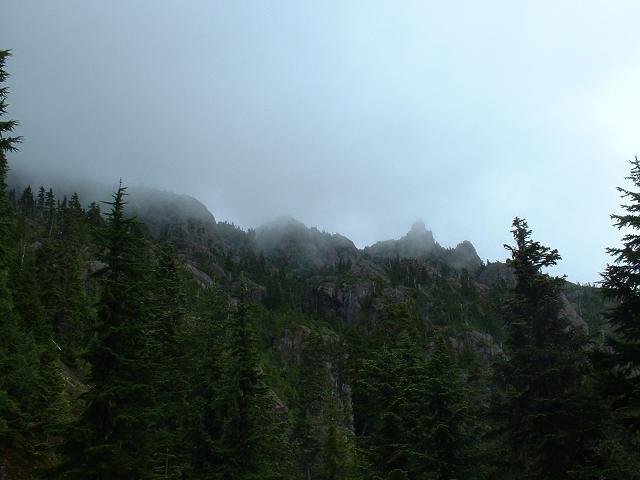
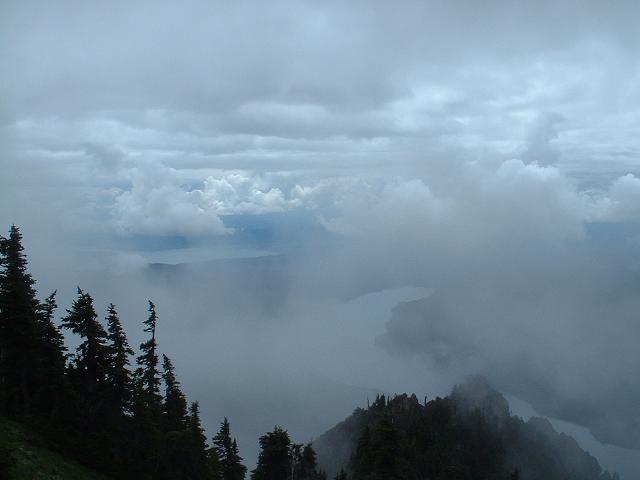
At the summit, we were fortunate to see the interior of the Olympics for about a half hour, until the clouds rolled in.

I'll let the photos speak for themselves.


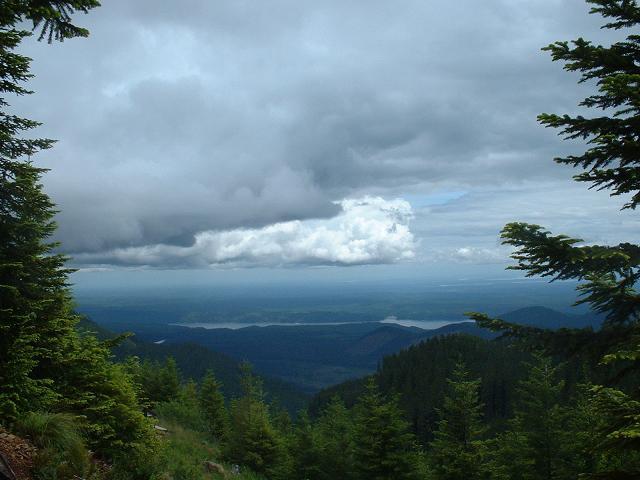
After Marmot Pass, Mount Ellinor is the best hike in the Olympics. It's sadistic, sure, rising over two thousand feet in 1.6 miles, but the view is worth the torture....
This Saturday, my younger sister, her friend, my wife, and I braved threatening weather to hike from the upper trailhead to the summit.

A third of the way up, what is generously called the "Summer Trail" breaks out of the forest, offering glimpses of the scenery to come.

Inaccessible for most of the year due to snow, the trail makes its way up a dry creek bed through a rock slide.

Once you're high enough, you can see Lake Cushman...

... and the end of Forest Service Road 2419, where you left your car over an hour ago, likely oblivious to the arduous climb ahead.

As the sign near the trail entrance warns, "Do not provoke the wildlife." Especially when the wildlife looks like it's gotten the worse end of a few bar brawls.

At the summit, we were fortunate to see the interior of the Olympics for about a half hour, until the clouds rolled in.

I'll let the photos speak for themselves.



Jul 9, 2005
and if you say "Wallyworld," that's a $250 fine
Oh, the ACLU. Those cranky liberals, always trashing American values, defending your right to say "Wal-Mart" in a council meeting in Yelm, Washington.
Huh?
Huh?


Jul 7, 2005
take courage
They have brought the battle to the rails.
"We shall go on to the end, we shall fight in France, we shall fight on the seas and oceans, we shall fight with growing confidence and growing strength in the air, we shall defend our Island, whatever the cost may be, we shall fight on the beaches, we shall fight on the landing grounds, we shall fight in the fields and in the streets, we shall fight in the hills; we shall never surrender...."
"We shall go on to the end, we shall fight in France, we shall fight on the seas and oceans, we shall fight with growing confidence and growing strength in the air, we shall defend our Island, whatever the cost may be, we shall fight on the beaches, we shall fight on the landing grounds, we shall fight in the fields and in the streets, we shall fight in the hills; we shall never surrender...."
Jul 6, 2005
The Portrait
Iain Pears, The Portrait
Pears' previous novel, The Dream of Scipio, deserves every blurb on its cover. Pears deftly interweaves three love stories around an imagined philosophical text, creating a unique tapestry of drama, suspense, and insight.
Where Scipio is adroitly erudite, though, The Portrait is forced, canned, name-droppish. Imagine an Art Appreciation professor flipping through slides of the classics, and you have a perfect rendition of Henry MacAlpine, the narrator, who exacts a form of artistic revenge on the antagonist, William Nasmyth, whose abuses of literary power have wrecked the lives of those near to both.
I feel a little nervous critiquing a novel that essentially attacks the pettiness of criticism, and hope that the narrator speaks for Pears when he says to Nasmyth, "I discovered early on that I could always forgive you anything, as long as you told the truth." There are elements of sheer beauty, as always, in Pears' prose, and deft didactic touches, but overall, The Portrait is disappointing. To paraphrase its narrator, it overpaints the subject.
The novel's weakness springs not from its author's lack of power--he has none, to my mind--but from the limits of direct narration. When the text is addressed in second person, "you" becoming both antagonist and reader, the effect can be surprising and unsettling, a la The Death of Artemio Cruz, but only in small doses. As a sustained effort, it becomes wooden and artificial, and the shocking revelations lose a good deal of their potential force. To switch modes, the novel is a slow crescendo from piano to mezzoforte; the final chords are solid, jarring, and muted.
Pears' previous novel, The Dream of Scipio, deserves every blurb on its cover. Pears deftly interweaves three love stories around an imagined philosophical text, creating a unique tapestry of drama, suspense, and insight.
Where Scipio is adroitly erudite, though, The Portrait is forced, canned, name-droppish. Imagine an Art Appreciation professor flipping through slides of the classics, and you have a perfect rendition of Henry MacAlpine, the narrator, who exacts a form of artistic revenge on the antagonist, William Nasmyth, whose abuses of literary power have wrecked the lives of those near to both.
I feel a little nervous critiquing a novel that essentially attacks the pettiness of criticism, and hope that the narrator speaks for Pears when he says to Nasmyth, "I discovered early on that I could always forgive you anything, as long as you told the truth." There are elements of sheer beauty, as always, in Pears' prose, and deft didactic touches, but overall, The Portrait is disappointing. To paraphrase its narrator, it overpaints the subject.
The novel's weakness springs not from its author's lack of power--he has none, to my mind--but from the limits of direct narration. When the text is addressed in second person, "you" becoming both antagonist and reader, the effect can be surprising and unsettling, a la The Death of Artemio Cruz, but only in small doses. As a sustained effort, it becomes wooden and artificial, and the shocking revelations lose a good deal of their potential force. To switch modes, the novel is a slow crescendo from piano to mezzoforte; the final chords are solid, jarring, and muted.
if elected I will not serve
Just to note that for the twenty-sixth year running I was not picked for the All-Star squad and my hometown was passed over by the Olympic committee.
melee in Mudville
How can you go into a series with a worse record and still be considered the favorite? Because you're the World Champeen Toronto Blue Jays. Powered by Joe Carter's home run blasts and cannon throws from right field, by Jose Guzman's stellar pitching, by Roberto Alomar's Gold Glove defense, by Ricky Henderson's fleet feet.
But when the spikes are laced up and the pine tar hits the handle, reputations don't matter. Each game is a brand new universe of opportunity, triumph, regret.
The Mariners continued their unlikely run through the 1994 League Championship Series with overpowering efforts in the first two games, held in the Kingdome. Randy Johnson outpitched Jose Guzman in Game One, allowing three runs in a complete game victory. Bret Boone led the Mariner charge, going 4-5 with an RBI and three runs. Final score: 9-3.
Game Two had a similar outcome. Erik Hanson carried the team through the fifth, bringing his scoreless streak to thirteen innings. Russ Swan finished the game, giving up only one run. The Mariner offense gave their pitchers plenty of breathing room, scoring nine runs on twenty-one hits. Junior Griffey was 4-5 with three RBI and a two-run shot, while Dave Valle went 3-5 with four RBI. Pat Hentgen gave up six runs in only 1.2 innings for the loss.
The series seemed to be getting away from them, but the Blue Jays stayed in it with spectacular pitching by veteran Dave Stewart. He held Seattle to one run in a complete game gem, edging out Chris Bosio's two-run eight-inning effort. The Mariner offense stalled, scoring their sole run on ten hits. Ricky Henderson and Roberto Alomar homered for the Jays.
Game Four would prove to be crucial. Cito Gaston sent Jose Guzman to the mound again, hoping for a better performance against Dave Fleming, who made his second playoff appearance. Jay Buhner started things off with a bang, knocking a 440-foot solo shot to the upper deck in the top of the first. Dave Valle followed with a single, and scored on Tino Martinez's two-run dinger later that inning.
The Jays roared back when ever-reliable Ricky Henderson smashed a two-run shot to left field in the bottom of the third. Seattle answered with bases loaded singles in the top of the fourth, and a Mike Blowers two-run shot in the top of the eighth. Russ Swan fanned Joe Carter with the bases jammed in the bottom of the inning, but the heroics weren't over until the ninth, when Jay Buhner nailed Paul Molitor, who was trying to leg a double into a triple, and then robbed Ed Sprague of extra bases with a diving catch to seal the win. Fleming went five innings, fanning six Jays and giving up two runs in the 7-2 contest.
The Mariners let momentum carry them into Game Five. Lou Piniella, in a surprise move, started Tim Leary and let Randy Johnson rest. The gamble proved to be brilliant. Leary gave up three runs in six innings, which were of no consequence to an explosive Mariner offense that scored a record twenty-two runs on thirty-one hits. Toronto starter Pat Hentgen gave up eight runs in only one dismal inning, and his replacements fared just as poorly. Piniella let the bench play after the fifth inning, and Rich Amaral, Bill Haselman, Mackey Sasser, and Dave Madagan all chipped in runs in the blowout. Jay Buhner finished 5-6 with 4 RBI and 4 runs, while Tino Martinez went 3-3 with 6 RBI and 3 runs. John Olerud provided the only Toronto offense with a three-run blast in the third.
The Mariners, heading to their first World Series since the team was formed in 1977, will face the Montreal Expos, also new to the Series, in the October Classic.
But when the spikes are laced up and the pine tar hits the handle, reputations don't matter. Each game is a brand new universe of opportunity, triumph, regret.
The Mariners continued their unlikely run through the 1994 League Championship Series with overpowering efforts in the first two games, held in the Kingdome. Randy Johnson outpitched Jose Guzman in Game One, allowing three runs in a complete game victory. Bret Boone led the Mariner charge, going 4-5 with an RBI and three runs. Final score: 9-3.
Game Two had a similar outcome. Erik Hanson carried the team through the fifth, bringing his scoreless streak to thirteen innings. Russ Swan finished the game, giving up only one run. The Mariner offense gave their pitchers plenty of breathing room, scoring nine runs on twenty-one hits. Junior Griffey was 4-5 with three RBI and a two-run shot, while Dave Valle went 3-5 with four RBI. Pat Hentgen gave up six runs in only 1.2 innings for the loss.
The series seemed to be getting away from them, but the Blue Jays stayed in it with spectacular pitching by veteran Dave Stewart. He held Seattle to one run in a complete game gem, edging out Chris Bosio's two-run eight-inning effort. The Mariner offense stalled, scoring their sole run on ten hits. Ricky Henderson and Roberto Alomar homered for the Jays.
Game Four would prove to be crucial. Cito Gaston sent Jose Guzman to the mound again, hoping for a better performance against Dave Fleming, who made his second playoff appearance. Jay Buhner started things off with a bang, knocking a 440-foot solo shot to the upper deck in the top of the first. Dave Valle followed with a single, and scored on Tino Martinez's two-run dinger later that inning.
The Jays roared back when ever-reliable Ricky Henderson smashed a two-run shot to left field in the bottom of the third. Seattle answered with bases loaded singles in the top of the fourth, and a Mike Blowers two-run shot in the top of the eighth. Russ Swan fanned Joe Carter with the bases jammed in the bottom of the inning, but the heroics weren't over until the ninth, when Jay Buhner nailed Paul Molitor, who was trying to leg a double into a triple, and then robbed Ed Sprague of extra bases with a diving catch to seal the win. Fleming went five innings, fanning six Jays and giving up two runs in the 7-2 contest.
The Mariners let momentum carry them into Game Five. Lou Piniella, in a surprise move, started Tim Leary and let Randy Johnson rest. The gamble proved to be brilliant. Leary gave up three runs in six innings, which were of no consequence to an explosive Mariner offense that scored a record twenty-two runs on thirty-one hits. Toronto starter Pat Hentgen gave up eight runs in only one dismal inning, and his replacements fared just as poorly. Piniella let the bench play after the fifth inning, and Rich Amaral, Bill Haselman, Mackey Sasser, and Dave Madagan all chipped in runs in the blowout. Jay Buhner finished 5-6 with 4 RBI and 4 runs, while Tino Martinez went 3-3 with 6 RBI and 3 runs. John Olerud provided the only Toronto offense with a three-run blast in the third.
The Mariners, heading to their first World Series since the team was formed in 1977, will face the Montreal Expos, also new to the Series, in the October Classic.
Jul 5, 2005
more joy in Mudville
During the regular season, the Mariners took eleven of thirteen from the Twins. But in the playoffs, anything is possible, especially when facing a lineup stacked with power hitters--Kirby Puckett, Dave Winfield, and Kent Hrbek.
In the first of a five-game series, Hrbek made his presence felt early, blasting a grand slam off reliever Jeff Nelson and spoiling Randy Johnson's eight-inning effort. The Mariner offense could take only three runs from Kevin Tapani, who pitched a complete game, winning 7-3.
Up 1-0 at home, but still underdogs, the Twins sent Scott Erickson to the mound. Despite his dismal regular season record, Erickson pitched like an ace, giving up just two runs in another complete game effort. But one was enough, since Erik Hanson scattered only five hits in eight innings to secure a shutout.
The Mariners' sleeping offense woke up upon their return to the Kingdome. Game Three was a bloodbath. Bret Boone homered three times; Tino Martinez cleared the bases twice. Chris Bosio and Jeff Nelson combined for four hits and two runs, as the Mariners pounded out 26 hits, 6 dingers, and an incredible 20 runs off six Twins pitchers. Willie Banks was charged with the loss, and Hrbek provided the only offense with a two-run shot in the fourth.
Game Four saw Tapani taking the mound again, as the Mariners sent Dave Fleming to finish off the Twins. Early on, everything was going Minnesota's way. Puckett smashed a three-run homer in the third, and Kidder effectively silenced the Mariner bats until the sixth, when Omar Vizquel bunted Tino Martinez home. Fleming, tiring in the sixth, was replaced by Nelson. In the seventh, consecutive sacrifice bunts scored Brian Turang and Griffey, but the Twins answered in the eighth with a Puckett solo shot.
Down 4-3 in the bottom of the ninth, the Mariners sent Junior Griffey to the plate. He singled, and was doubled to third by Jay Buhner. After a Dave Valle bunt tied it at 4 apiece, Tino Martinez singled to load the bases. Tapani, trying for his second complete game win of the series, gave up a dribbling Edgar Martinez bunt to end it 5-4.
The Mariners established a playoff record, scoring all five runs on bunts. They now face the world champion Toronto Blue Jays for the league title.
In the NL, the Philadelphia Phillies beat the Chicago Cubs in four games, while the Montreal Expos eliminated the San Francisco Giants. Toronto knocked off the Chicago White Sox in five games.
In the first of a five-game series, Hrbek made his presence felt early, blasting a grand slam off reliever Jeff Nelson and spoiling Randy Johnson's eight-inning effort. The Mariner offense could take only three runs from Kevin Tapani, who pitched a complete game, winning 7-3.
Up 1-0 at home, but still underdogs, the Twins sent Scott Erickson to the mound. Despite his dismal regular season record, Erickson pitched like an ace, giving up just two runs in another complete game effort. But one was enough, since Erik Hanson scattered only five hits in eight innings to secure a shutout.
The Mariners' sleeping offense woke up upon their return to the Kingdome. Game Three was a bloodbath. Bret Boone homered three times; Tino Martinez cleared the bases twice. Chris Bosio and Jeff Nelson combined for four hits and two runs, as the Mariners pounded out 26 hits, 6 dingers, and an incredible 20 runs off six Twins pitchers. Willie Banks was charged with the loss, and Hrbek provided the only offense with a two-run shot in the fourth.
Game Four saw Tapani taking the mound again, as the Mariners sent Dave Fleming to finish off the Twins. Early on, everything was going Minnesota's way. Puckett smashed a three-run homer in the third, and Kidder effectively silenced the Mariner bats until the sixth, when Omar Vizquel bunted Tino Martinez home. Fleming, tiring in the sixth, was replaced by Nelson. In the seventh, consecutive sacrifice bunts scored Brian Turang and Griffey, but the Twins answered in the eighth with a Puckett solo shot.
Down 4-3 in the bottom of the ninth, the Mariners sent Junior Griffey to the plate. He singled, and was doubled to third by Jay Buhner. After a Dave Valle bunt tied it at 4 apiece, Tino Martinez singled to load the bases. Tapani, trying for his second complete game win of the series, gave up a dribbling Edgar Martinez bunt to end it 5-4.
The Mariners established a playoff record, scoring all five runs on bunts. They now face the world champion Toronto Blue Jays for the league title.
In the NL, the Philadelphia Phillies beat the Chicago Cubs in four games, while the Montreal Expos eliminated the San Francisco Giants. Toronto knocked off the Chicago White Sox in five games.
Jul 4, 2005
joy in Mudville
The Mariners reached the playoffs! No, not those Mariners, who lounge around Safeco Field and have aspirations of mediocrity, oh no--the digital Mariners who inhabit my Super Nintendo. Led by staff aces Chris Bosio and Tim Leary, powered by the hot bats of Junior Griffey and Jay Buhner, relying on the fleet feet of Brian Turang and Omar Vizquel, these Mariners went 137-25 in the regular season and face the Minnesota Twins in the wildcard contest.
Oddly enough, the weakest hitter has been Bret Boone, who was dumped by the organization yesterday for posting numbers eerily similar to his early seasons in Seattle.
I'll post updates, because hey--my virtual season means as much as any real one, if you stop to think about it.
Oddly enough, the weakest hitter has been Bret Boone, who was dumped by the organization yesterday for posting numbers eerily similar to his early seasons in Seattle.
I'll post updates, because hey--my virtual season means as much as any real one, if you stop to think about it.
Jul 3, 2005
the vortex made me do it: continued
"It sure is nice to get off the beaten path," my older sister said as our overloaded Dodge Caravan, stuffed with me, my wife, my sister, her husband, and a cousin, turned from one paved road to a narrower paved road. We were headed to Sedona.
The Caravan led a caravan of three cars, transporting some thirteen members of the Anderson and Polonenko clans, all related, all backseat drivers. We were about to meet the Vortex.
Sedona is a tourist trap in the finest sense of the cliché. Nestled amid famed red bouldery canyons, Sedona is home to an assortment of wealthy retirees and wealthier con artists. The latter prey upon the legions of dupes who come to Sedona looking for enlightenment without the effort, energy, and time required of meditative practice.
Behold, the Vortex! Four of them, actually. Columns of spiritual energy, or just plain energy, or magnetic fields, or invisible money drains. You can pay hundreds of dollars for tours to the vortices, for pseudospiritual mumbo-jumbo shamelessly plundered from Hindu, Buddhist, and Native American traditions. (See Penn and Teller's withering critique.)
And yes, people really do part with massive sums of money. Sitting near a "Vortex Tours" kiosk, I overheard this conversation:
Fact: After only a few hours in Sedona, our troupe could neither stay together in a single caravan nor decide on a dinner spot without diplomatic negotation.
Fact: Not once, but twice, a pedestrian ran across the street in front of the van, doing the same silly spinning grab-the-sunglasses dance in the middle of the road and narrowly avoiding injury.
Fact: At the Wildflower Bread Company, a place where preppies and hippies can coexist peaceably, my younger sister ordered "Chicken Caesar salad with chicken salad on the side," and was surprised when her Caesar salad was chickenless. (The chicken salad was good, she informed us.)
Fact: There was no visible police presence in Sedona, which may be related to the other fact that it has only one ordinance in force: Thou Shalt Not Speak Ill of the Vortex.
Fact: You can spin two hours' worth of laughs out of the Vortex concept, even among teetotalers.
You really ought to visit Sedona. Even if incense nauseates you, even if you're as spiritual as a liver fluke, even if your only nearby crystal is in your Timex, Sedona is for you. It's beautiful, and if you park within city limits, free.
Go in peace, and may the Vortex guide you.
The Caravan led a caravan of three cars, transporting some thirteen members of the Anderson and Polonenko clans, all related, all backseat drivers. We were about to meet the Vortex.
Sedona is a tourist trap in the finest sense of the cliché. Nestled amid famed red bouldery canyons, Sedona is home to an assortment of wealthy retirees and wealthier con artists. The latter prey upon the legions of dupes who come to Sedona looking for enlightenment without the effort, energy, and time required of meditative practice.
Behold, the Vortex! Four of them, actually. Columns of spiritual energy, or just plain energy, or magnetic fields, or invisible money drains. You can pay hundreds of dollars for tours to the vortices, for pseudospiritual mumbo-jumbo shamelessly plundered from Hindu, Buddhist, and Native American traditions. (See Penn and Teller's withering critique.)
And yes, people really do part with massive sums of money. Sitting near a "Vortex Tours" kiosk, I overheard this conversation:
Bored Attendant: How was the trip?We spent parts of two days in Sedona. By the end of our time there, I believed in the vortex, in its power to baffle and confuse.
Dupe: It was fantastic! I was worried that we were going to cross rough terrain in the jeep, a little nervous, but then I saw that we'd be on nice roads the whole way, which was a relief.
Attendant: Uh-huh.
Dupe: Say, I think I left my vortex guide wedged between the seats. Could I just have another one?
Attendant: (thinking to self) You've paid upwards of $150 for an hour-long ride through the outskirts of Sedona, which you could have done yourself for free. Sure! Have a great day!
Fact: After only a few hours in Sedona, our troupe could neither stay together in a single caravan nor decide on a dinner spot without diplomatic negotation.
Fact: Not once, but twice, a pedestrian ran across the street in front of the van, doing the same silly spinning grab-the-sunglasses dance in the middle of the road and narrowly avoiding injury.
Fact: At the Wildflower Bread Company, a place where preppies and hippies can coexist peaceably, my younger sister ordered "Chicken Caesar salad with chicken salad on the side," and was surprised when her Caesar salad was chickenless. (The chicken salad was good, she informed us.)
Fact: There was no visible police presence in Sedona, which may be related to the other fact that it has only one ordinance in force: Thou Shalt Not Speak Ill of the Vortex.
Fact: You can spin two hours' worth of laughs out of the Vortex concept, even among teetotalers.
You really ought to visit Sedona. Even if incense nauseates you, even if you're as spiritual as a liver fluke, even if your only nearby crystal is in your Timex, Sedona is for you. It's beautiful, and if you park within city limits, free.
Go in peace, and may the Vortex guide you.
Jul 1, 2005
the vortex made me do it
After more than a week away from the computer, I'm back, and have tales wonderful to tell. First, and most important, my brother's wedding ceremony was simply gorgeous, and I was proud to stand with him as he exchanged vows with a beautiful young woman. Charity, welcome to the family.
Second, the fluff. The gravy. The "added bonus." The highlights and lowlights, in no particular order....
1. I am tired. Our flight from Phoenix (or, as a gate agent tried to spell it, "Phonex") departed an hour and a half late, and then the wife and I sat in traffic with Mom-in-law for an hour as four lanes of I-5 condensed to one just north of Federal Way. We made it back to Olympia at 2:30 this morning, but couldn't sleep past nine. If this posting lacks coherence, blame sleep deprivation.
2. Only in the Southwest: In-N-Out and Superpumper. Grub and gas, respectively.
3. At the wedding reception, my parents danced in public, the first time I have witnessed such a miracle. In fact, the family (and I include some longstanding friends in that number) joined in a circle and did some sort of hokey-pokeyish jig to a rock'n'roll number. We were all sober.
4. On Thursday, the day of our return to cooler climes, we planned to trek out to Tortilla Flat for prickly pear ice cream, which Mom had been talking up all week. Stuck in traffic, we ducked off the freeway and drove through remote areas of Phoenix, passing by, I kid you not, "Vinchell," a former Winchell's Donut Shop that was under new management. When we got back onto the freeway, rush hour congestion forced us to turn around and head to the airport, mission unaccomplished. Then we discovered that our flight was delayed, and collective head-smacking ensued.
5. On the last day of school, the main office secretary, hearing that I would visit the Grand Canyon, adjured me to stay for the sunset. The family spent most of Tuesday stopping at various viewpoints around the canyon and hiking down a bit on the Bright Angel trail. We then detoured to Cameron for "Navajo tacos" at the Cameron Trading Post, where our waitress laughed as we all ordered too much to eat. An hour later, the Dodge Caravan galloped back to the park, just in time for a sunset made all the more spectacular by a low-lying forest fire haze.
6. Speaking of fires, Wednesday's trip to the Sunset Crater brought us within a thousand yards of a brush fire, purely by accident. Oddly, the "99 Things to Do in Northern Arizona" guide, on page 6, states:
7. CAVE DWELLINGS ARE NOT TOILETS. Seen on the most depressing sign in Arizona.
8. When you tire of rock-paper-scissors, remember this: foot defeats fish, fish defeats skunk, and skunk defeats foot.
There's more--I haven't even gotten to the Vortex yet--but remember, I'm tired. Later.
Second, the fluff. The gravy. The "added bonus." The highlights and lowlights, in no particular order....
1. I am tired. Our flight from Phoenix (or, as a gate agent tried to spell it, "Phonex") departed an hour and a half late, and then the wife and I sat in traffic with Mom-in-law for an hour as four lanes of I-5 condensed to one just north of Federal Way. We made it back to Olympia at 2:30 this morning, but couldn't sleep past nine. If this posting lacks coherence, blame sleep deprivation.
2. Only in the Southwest: In-N-Out and Superpumper. Grub and gas, respectively.
3. At the wedding reception, my parents danced in public, the first time I have witnessed such a miracle. In fact, the family (and I include some longstanding friends in that number) joined in a circle and did some sort of hokey-pokeyish jig to a rock'n'roll number. We were all sober.
4. On Thursday, the day of our return to cooler climes, we planned to trek out to Tortilla Flat for prickly pear ice cream, which Mom had been talking up all week. Stuck in traffic, we ducked off the freeway and drove through remote areas of Phoenix, passing by, I kid you not, "Vinchell," a former Winchell's Donut Shop that was under new management. When we got back onto the freeway, rush hour congestion forced us to turn around and head to the airport, mission unaccomplished. Then we discovered that our flight was delayed, and collective head-smacking ensued.
5. On the last day of school, the main office secretary, hearing that I would visit the Grand Canyon, adjured me to stay for the sunset. The family spent most of Tuesday stopping at various viewpoints around the canyon and hiking down a bit on the Bright Angel trail. We then detoured to Cameron for "Navajo tacos" at the Cameron Trading Post, where our waitress laughed as we all ordered too much to eat. An hour later, the Dodge Caravan galloped back to the park, just in time for a sunset made all the more spectacular by a low-lying forest fire haze.
6. Speaking of fires, Wednesday's trip to the Sunset Crater brought us within a thousand yards of a brush fire, purely by accident. Oddly, the "99 Things to Do in Northern Arizona" guide, on page 6, states:
So here we are in a northern Arizona summer that, for the first time in several years, carries no threat of closures or restriction due to drought or fire danger.In retrospect: not exactly.
7. CAVE DWELLINGS ARE NOT TOILETS. Seen on the most depressing sign in Arizona.
8. When you tire of rock-paper-scissors, remember this: foot defeats fish, fish defeats skunk, and skunk defeats foot.
There's more--I haven't even gotten to the Vortex yet--but remember, I'm tired. Later.
Subscribe to:
Posts (Atom)